0

Why We Need to Persevere

This post was written by Mel Lawrenz on Wednesday, May 15th, 2013 and is filed in Spiritual Influence.

Modeling Perseverance is one of the most powerful forms of spiritual influence.

We don’t seem to use the word perseverance very often. Maybe because it has the word severe in it. Or maybe it seems a bit old-fashioned, like King James Bible English. There is no question that other words roll more easily off the tongue, like winning, succeeding, finishing. But here it is, the biblical mandate: persevere.

The best influencers know how to persevere. Whether or not they know the duration of the effort, the struggles ahead, the distance to the finish line-or even whether there is a finish line—they keep going. One foot in front of the other. Progressing one inch at a time. Each day a new opportunity to start again. People who persevere hold to a conviction that plodding ahead pleases God, even when there is no applause and no immediate reward.
Continue Reading…

Share
0

Learn to Follow

This post was written by Mel Lawrenz on Saturday, May 11th, 2013 and is filed in Spiritual Influence.

Stories of Influence: Learn to Follow

Learning to follow is an essential characteristic of life, work, and leadership. It helps us to influence others for the right reasons.


Share
2

In Times of Crisis

This post was written by Mel Lawrenz on Saturday, December 15th, 2012 and is filed in Spiritual Influence.

Crisis opens us like an earthquake cracking the crust of the earth. A crisis is a time to decide, a turning point. Crisis moments require spiritual responsiveness and open a whole new opportunity for sustained spiritual influence. Crisis is where we learn about our base instincts, because people’s hearts are torn open, what is inside comes out, and new truths and values may enter in.

Of all the formative influences in people’s spiritual lives, the experience that is the most influential is crisis. People never forget a heartrending, danger-ridden passage—a true crisis—and what they learned about faith during and after that time. The most deforming experiences in life often turn out to be the most formative.

The Ministry of Presence

Time and again in the Scriptures, what God says in times of crisis is: I am here. I will not abandon you. You are not alone.
Continue Reading…

Share
9

Walking Lightly in the Halls of Power

This post was written by Mel Lawrenz on Wednesday, November 7th, 2012 and is filed in Spiritual Influence.

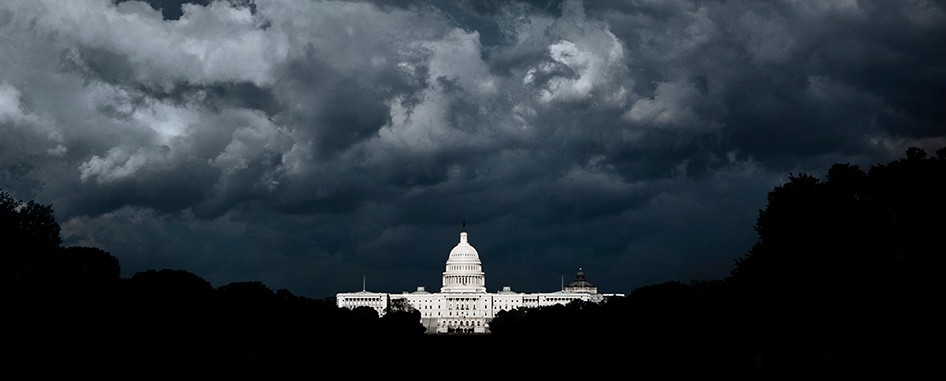
On this big news day in which power and influence are on people’s minds, Billy Graham turns 94-years-old. His life illustrates godly ambition.

From “Sanctify Ambition” in Spiritual Influence: the Hidden Power Behind Leadership.

One man has proclaimed the good news of Jesus to more people in the world than any other person in history. Over a period of six decades, he has been sought by the men who have been president of the United States. He walked through open doors of foreign heads of state, leaders of industry, and religious leaders of every sort. Hundreds of millions of households knew him through the television screen. And all this happened because Billy Graham is a most ambitious man.
Continue Reading…

Share
0

A Call for Wisdom in Washington

This post was written by Mel Lawrenz on Tuesday, November 6th, 2012 and is filed in Christian Thought, Spiritual Influence.

A Call for Wisdom in Government

Mel Lawrenz

To our leaders in government:

We will perish in foolishness if we do not grow in wisdom.

We elected you to office to do near-impossible tasks: to defend us in an unsafe world, to structure the basic services of an ordered society, to protect those who are vulnerable. We ask you to govern, but with our consent. We plead with you to address major social and economic problems, but we know that our culture often works against solutions.
Continue Reading…

Share
2

Applying “Taking Initiative”

This post was written by Mel Lawrenz on Monday, October 29th, 2012 and is filed in Spiritual Influence.

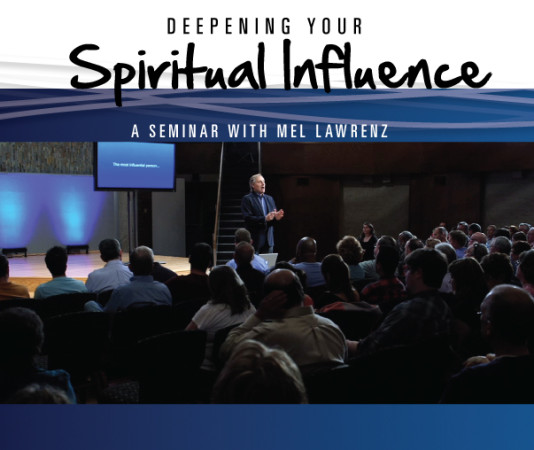
Check back here for questions and comments applying part 2 of “Deepen Your Influence – the Online Seminar.”

After you view the seminar segment (“Taking Initiative”…)

Where do you find the very best ideas for the work of influence and leadership? [comment below]

If spiritual influence includes “making things right,” what is one way in which you have seen that in action? [comment below]

Have you experienced a time when crisis was an opportunity to have spiritual influence? [comment below]

Share
0

Eleven Nations—One Pursuit

This post was written by Mel Lawrenz on Monday, October 22nd, 2012 and is filed in Spiritual Influence.

If we want to pursue wisdom for our life and work we must reach beyond the circles we normally move in to find people who have the same questions we do, but whose life experiences are different than ours. This past week I’ve had the extraordinary privilege of guiding a diverse international group of leaders into a learning community, exploring the ways we can make an impact in our families, our churches, and our communities today.

The fifteen guests for this year’s session of The International Center sponsored by Elmbrook Church come from Malaysia, Nepal, India, Iran, Paraguay, Rwanda, Bangladesh, Brazil, Belize, and Cuba. Fifty years ago this week the Cuban Missile Crisis was unfolding–and now we have with us three pastors from Cuba.
Continue Reading…

Share
8

Applying “Getting Grounded”

This post was written by Mel Lawrenz on Monday, October 15th, 2012 and is filed in Spiritual Influence.

Check back here for questions and comments applying part 1 of “Deepen Your Influence – the Online Seminar.”

Who has been the most influential person in your life, and why? [comment below]

What has been the most influential experience in your life, and why? [comment below]

Share
0

Online seminar starting soon

This post was written by Mel Lawrenz on Saturday, September 29th, 2012 and is filed in Spiritual Influence.

For months now we have been preparing a special online learning experience for you that will help you make a greater impact in your work, your leadership, your family, your church, and your life.

I have done the “Deepen Your Influence” seminar now with many groups in the U.S. and overseas, and I am genuinely enthused to engage with you in an online version of it which will spread over 8 weeks beginning the week of October 15. With everyone’s schedules being so full, we’re glad to offer this learning experience you can engage in from the convenience of your own home or office.

Here’s more info (important to sign up now).


Share
0

Transformation of the Heart

This post was written by Mel Lawrenz on Saturday, September 15th, 2012 and is filed in Spiritual Influence.

Bill Lenz, pastor of Christ the Rock Community Church, recently informed me of a leadership development program called “Transformation of the Heart.” I’ve known Bill for many years and respect their ministry. And this opportunity in beautiful Green Lake, Wisconsin, looks fantastic. Go HERE for more information, including two videos that explain their program.

Transformation of the Heart is a journey designed to promote life change in the hearts of Christian leaders, pastors, and their spouses. When you look at an iceberg, only the top 10% is visible above the waterline. Many churches are struggling because efforts are focused on the visible 10% of our lives which are externally visible, butdo not seem to help transform our emotional and spiritual core-the 90% of our being that is not externally visible. At Transformation of the Heart, God moves individuals and church communities to examine and transform emotional and spiritual health in a facilitated small group model. It is for church communities which hunger for a way to engage the underlying brokenness and sinful patterns in our hearts and to allow God to redeem and transform them. This has been the pivotal path through which Christ the Rock Community Church has discipled hundreds of new and old believers for over 20 years.”

Share
0

A Call for Wisdom in Washington

This post was written by Mel Lawrenz on Thursday, August 16th, 2012 and is filed in Christian Thought, Spiritual Influence.

A Call for Wisdom in Government

Mel Lawrenz

To our leaders in government:

We will perish in foolishness if we do not grow in wisdom.

We elected you to office to do near-impossible tasks: to defend us in an unsafe world, to structure the basic services of an ordered society, to protect those who are vulnerable. We ask you to govern, but with our consent. We plead with you to address major social and economic problems, but we know that our culture often works against solutions.

In short, we ask you to do those things that do not come naturally to human beings. But we need you to try.

We all must grow past the foolishness of naivety, irresponsibility, and cynicism. And we need leaders who will lead the way. We call on you to seek a higher wisdom in your leadership.

You have power, but the corruptions of pride and arrogance will ruin your integrity.

You have authority, but you need to develop moral authority to have an enduring and honorable influence.

You have responsibility to speak truth, but there are powerful forces compelling you to spin, obfuscate, and lie.

We need you to be intelligent and learned, but with wisdom. We need strong leadership that comes not from force of personality and will, but from the strength of truth. We do not need you to dictate what we should do, we need streams of wisdom so that we will all understand what we may do and should choose to do.

Above all we need respect. We need you to respect all people in every part of the world regardless of their station in life because the dignity of human beings bestowed by God the Creator is the foundation of a civilized society. (1)

The “unalienable rights” of life, liberty, and the pursuit of happiness need to be balanced with the responsibilities of justice, equity, and generosity.

We need you to come up with good ideas that are based on great ideals. We, the public, understand that disagreement, debate, and tension are all part of the process of governing. But we implore you to find consensus for the vexing problems of our times.

We have elected you to do near-impossible tasks. That is why you need “the wisdom from above” which is “first pure, then peaceable, gentle, open to reason, full of mercy and good fruits, impartial and sincere.” (2) If your work is infused with that quality of wisdom, there is no telling how much you might accomplish.

Carry out your tasks by modeling what is required of all people: “to do justice, love mercy, and walk humbly with God.” (3)

Winning is not enough. Dominance is empty. Common sense is not at all common. We pray that you will have the the courage and selflessness of Solomon who said to God on the day he became a leader: “give me wisdom… to govern this great people.” (4)

Notes

1 Genesis 1:27
2 James 3:17
3 Micah 6:8
4 2 Chronicles 1:10

Mel Lawrenz

[If you agree with this statement, use the SHARE function below.]

Share
0

What Does God Require of Us?

This post was written by Mel Lawrenz on Sunday, July 29th, 2012 and is filed in Spiritual Influence.

All of us wrestle with the expectations that other people have of us. The only expectations that matter, ultimately, are God’s expectations. If we live up to those, with God’s help, we will be fulfilling the reasonable expectations others have.

The prophet Micah said, “He has shown you, O mortal, what is good. And what does the Lord require of you? To act justly and to love mercy and to walk humbly with your God” (Micah 6:8). God has shown us what is good. He has not left us in the dark. We don’t need to invent or reinvent the mission of God.
Continue Reading…

Share
5

Planting the Seminal Idea

This post was written by Mel Lawrenz on Thursday, June 28th, 2012 and is filed in Spiritual Influence.

When we think of the great leaders of the past, we may remember their accomplishments, but just as likely we remember some great idea–a seminal idea–which dominated their lives and drove them to accomplish the great thing. Seminal, from the Latin word for seed, means something so compelling that it has a profound influence on others. The seminal idea sprouts and grows, and then it bears fruit. It gives life. The seminal idea spreads its own seed in hidden places. It infiltrates. It may subvert. It has the potential to prevail.

Abraham Lincoln was compelled by the seminal idea that the union of the states could not be broken. Winston Churchill championed the seminal idea that tyranny should not be tolerated under any circumstances. Martin Luther King Jr.’s seminal idea was that all people are owed the same respect because they have the same God-given dignity.


Continue Reading…

Share
8

Dealing with a Sense of Failure

This post was written by Mel Lawrenz on Thursday, June 7th, 2012 and is filed in Spiritual Influence.

[Excerpt from upcoming book, Spiritual Influence: The Hidden Power Behind Leadership]

When we are honest we will admit to God and to the appropriate people in our lives when we have failed. There is just no reason to hold back—though almost every one of us does. (This is not to say that one’s failures are everybody’s business. Discretion must go hand-in-hand with confession.) Pretending we are something that we are not simply sets us up for the most devastating failure of all—some calamitous fall because of pride.

But on the other hand there is this problem: when we live with a constant sense of inadequacy, guilt, and failure, we are hobbled. We should have humility, but we cannot lead out of a sense of humiliation. “Failure” is not supposed to be an identity.
Continue Reading…

Share
21

Building Past Failure

This post was written by Mel Lawrenz on Thursday, May 31st, 2012 and is filed in Spiritual Influence.

The single sentence that came crackling through the radio signal from almost a quarter-million miles from Earth sounded simple, even routine. “Houston, we’ve had a problem.” The three crew members of the Apollo 13 spacecraft circling the moon knew that something had gone terribly wrong with their spacecraft after hearing the sound of an explosion and watching their electricity-generating fuel cells go dead.

The planned moon landing was aborted and emergency measures were put in place for the crew to coax their crippled craft back toward Earth. Three days later the capsule splashed down in the Pacific. NASA called the mission “a successful failure.”
Continue Reading…

Share
4

Making Wrong Things Right

This post was written by Mel Lawrenz on Thursday, April 26th, 2012 and is filed in Spiritual Influence.

The vocabulary of faith in Scripture includes these fundamental ideals: righteousness and justice. These are not separate realities; they are bound to each other. Righteousness is when things are “right”; justice is how things get set “right.” It is all about being right, or getting right while living in a world that is wrong. So wrong. In so many ways wrong. It is also about being wise enough to realize the problem is not “out there,” but resides in and emanates from human nature.
Continue Reading…

Share
5

It Is Not Too Late

This post was written by Mel Lawrenz on Thursday, April 19th, 2012 and is filed in Spiritual Influence.

At his best, man is the noblest of all animals; separated from law and justice he is the worst.
-Aristotle

If you walked the streets of Berlin in early May of 1945, you may have felt like you were striding a thin line between earth and hell. Smoldering fires, piles of bricks where neoclassical buildings once stood, silence and desolation except perhaps for the sound of a Soviet tank patrolling a nearby street or the barking of a hungry dog. The Battle of Berlin was over. The last of 363 Allied bombing raids over the city complete. Hitler’s charred body would soon be discovered outside his bunker. And you may have wondered to yourself, What now? What can anyone do with this devastated world? It is challenging enough to think of what it would take to rebuild the apartments and civic buildings, the museums and churches, but harder still is the question, How can anyone rebuild humanity after its periodic spasms of evil?
Continue Reading…

Share
1

The Power of Great Ideas

This post was written by Mel Lawrenz on Thursday, February 16th, 2012 and is filed in Spiritual Influence.

The action film Inception uses a science fiction idea to tell the story of an amazing heist. A corporate spy and thief has developed a unique capability to enter the subconscious of victims while they are in a chemically induced deep dream state, then insert characters and situations into the dream, leading ultimately to uncovering valuable corporate information. The main point of the story turns out to be the unintended consequences of planting ideas in people’s minds. When the main character places one idea in his own wife’s mind—that maybe the world we live in is just an illusion—the idea takes root, becomes all-absorbing, and ultimately leads to ruin.

Think of the powerful forces in history that were simply ideas before they entered into human experience. Until the moment the detonator was tripped in a metal sphere on a hundred-foot-high platform in the desert of New Mexico on July 16, 1945, the atom bomb was a theory. Just an idea. But in a split second of blinding light and concussion the idea became a force that would make nations cower and change geopolitical realities irrevocably. Democracy was a theory that was debated in the cities of ancient Greece before anybody thought to see if it could work. Long before the Wright brothers flew the first manned airplane at Kitty Hawk, someone had the idea of the airfoil—a wing that would create suction on the topside, making it possible to lift a heavier-than-air machine into the sky. In 1982 a worldwide network of interconnected networks was standardized—the internet—but only on the basis of the idea of “packet-switched networks,” which came out of the 1960s.


Continue Reading…

Share
5

What Great Idea Matters to You?

This post was written by Mel Lawrenz on Thursday, January 26th, 2012 and is filed in Spiritual Influence.

Great minds discuss ideas; average minds discuss events; small minds discuss people.

-Anonymous

Try this: close your eyes, and for the next thirty seconds do not think about a pink elephant. Remember, you are not to think of a pink elephant. Ready, set, go.

How far did you make it? And what does that tell you about the way the mind works?

One of the most powerful influences in our lives is invisible, sometimes very small, often hypothetical. We are talking about ideas. They fill our minds, they motivate our actions.
Continue Reading…

Share
6

Discovery Exceeds Our Expectations

This post was written by Mel Lawrenz on Thursday, January 19th, 2012 and is filed in Spiritual Influence.

Everyone wants to discover something new and fresh. Discovery is intriguing and invigorating. Discovery reminds us that our lives are not over yet, that there is more to life than what we can see right now, and that all of us have yet-undiscovered potential.

In 1804 an expedition commissioned by President Thomas Jefferson set out on one of the greatest voyages of discovery in American history. The known regions of the United States at that time were limited to the geography east of the Mississippi—less than a third of the land mass of U.S. territory. What lay to the west, all the way to the Pacific Ocean, was a vast unknown region. The charge given to Meriwether Lewis and William Clark and a few dozen men under their charge was to forge their way west, looking for a water passage all the way to the Pacific for the purpose of commerce.


Continue Reading…

Share
31

Understand Influence

This post was written by Mel Lawrenz on Thursday, January 5th, 2012 and is filed in Spiritual Influence.

Here is the first of a series we’re calling “Stories of Influence.” While not an example of “spiritual influence,”Albert Einstein’s work helps us understand the concept.
Continue Reading…

Share
0

Bonhoeffer – The Power of Truth

This post was written by Mel Lawrenz on Sunday, January 1st, 2012 and is filed in Spiritual Influence.

Dietrich Bonhoeffer showed remarkable faith and courage in standing against the power of Hitler’s Third Reich. This short video in the series “Stories of Influence” is part of “The Influence Project” (coming soon).


Share
0

Wilberforce – Make Things Right

This post was written by Mel Lawrenz on Sunday, January 1st, 2012 and is filed in Spiritual Influence.

William Wilberforce is a historic example of a committed believer seeking to “make things right.” This short video in the series “Stories of Influence” is part of “The Influence Project” (coming soon).


Share
4

The Power of Great Ideas

This post was written by Mel Lawrenz on Thursday, November 17th, 2011 and is filed in Spiritual Influence.

[This article is part of the "spiritual leadership today" study/discussion going on this year. For all articles in the series, click the Spiritual Influence tab at the top of the page. To have them delivered, subscribe to The Brook Letter]

“Great minds discuss ideas; average minds discuss events; small minds discuss people.” Eleanor Roosevelt, wife of U.S. President FDR

There is a simple psychological experiment that goes like this: close your eyes, and for the next thirty seconds do not think about a pink elephant. Remember, you are not to think of a pink elephant. Ready, set, go…

How far did you make it? And what does that tell you about the way the mind works?

One of the most powerful influences in our lives is invisible, sometimes very small, often hypothetical. We are talking about ideas. They fill our minds, they motivate our actions. They are the shape of how we view reality and–very importantly–possible new realities. Ideas are sometimes mental impressions and other times full-bore convictions. When connected with creativity, ideas are a flow we call imagination–sometimes a trickle, other times a torrent. People get carried away with their imaginations, which is often the way the best new things happen.


Some leaders say they are more about action than ideas. But unless someone is acting out of pure animal instinct with no thought behind it at all, every action has some idea behind it.


Continue Reading…

Share
2

Why Integrity is Difficult Today

This post was written by Mel Lawrenz on Thursday, November 10th, 2011 and is filed in Spiritual Influence.

[This article is part of the "spiritual leadership today" study/discussion going on this year. For all articles in the series, click the Spiritual Influence tab at the top of the page. To have them delivered, subscribe to The Brook Letter]

The core issues of integrity remain the same across the ages and across cultures. The coherence of the person, the consistency between the public self and the private self, the need for sound character, all lie at the heart of spiritual influence.

But today we face special challenges to integrity.
Continue Reading…

Share
4

Why Influence Matters

This post was written by Mel Lawrenz on Thursday, November 3rd, 2011 and is filed in Spiritual Influence.

[This article is part of the "spiritual leadership today" study/discussion going on this year. For all articles in the series, click the Spiritual Influence tab at the top of the page. To have them delivered, subscribe to The Brook Letter]

What is exciting about the possibilities of spiritual influence is that it is about the issues that are at the essence of what it means to be human. It is about the issues that matter most in life.

1. Spiritual Influence Is About People

People are complicated and so the call to influence people for the good is complicated. We have to decide when to tell people what to do and when to teach them principles so they can figure out what to do. We have to figure out the goal or destiny of what we are aiming at. In an organization, the goal may be short-term and measurable. In spiritual leadership, the goal is helping people become more like Christ-far more difficult to measure, but also far more important than anything else. Spiritual leadership is thus an extension of discipleship. Influencing people toward become more like Christ leads to groups that have more spiritual character and organizations that have something like souls, not just objectives.


Continue Reading…

Share
2

The Risks and Rewards of Influence

This post was written by Mel Lawrenz on Thursday, October 20th, 2011 and is filed in Spiritual Influence.

[This article is part of the "spiritual leadership today" study/discussion going on this year. For all articles in the series, click the Spiritual Influence tab at the top of the page. To have them delivered, subscribe to The Brook Letter]

“Influence” is a significant word, packed with rich meaning. The Latin influentia means something that flows in and causes changes, usually a force that is imperceptible or hidden. (Notice fluent within the word; something that flows.) The basic idea is that all of us have forces and powers at work on us and within us, and we can influence others to affect the their thoughts and actions, or even the course of events to some constructive end. We are influenced, and we are influencers. The force or power of influence usually lies beneath the surface of things.


In medieval Latin influentia was sometimes used superstitiously to describe the “inflow” of celestial power that could affect one’s destiny. Later it was used in the sense of “imperceptible or indirect action exerted to cause changes.” In a Christian sense, influentia was that hidden force of God at work in the world–invisible, but powerful.


Continue Reading…

Share
7

The Hidden Power of Influence

This post was written by Mel Lawrenz on Thursday, September 29th, 2011 and is filed in Spiritual Influence.

[This article is part of the "spiritual leadership today" study/discussion going on this year. For all articles in the series, click the Spiritual Influence tab at the top of the page. To have them delivered, subscribe to The Brook Letter]

“The most hateful human misfortune is for a wise man to have no influence.” Herodotus, philosopher, 5th c BC

When he was just five years old Albert Einstein’s uncle showed him a compass and it captivated the boy’s attention. Whichever way the compass was moved some invisible force acted on the needle, keeping it turning on its axis, pointing in the same direction. In later life Einstein liked to tell the story about that moment when he first understood that “something deeply hidden had to be behind things.” That would typify the life of the great physicist whose life work would pursue hidden forces, proving things that defied explanation like the unity of the physical and the non-physical, matter and energy. Ideas that began as white lines traced on chalkboards matured into scientific papers for which he would win the Nobel Prize. Principles that, when discovered, would make it possible to design a terrible weapon that would devastate a city by tearing apart the atoms in a two pound chunk of enriched uranium.

He was brilliant beyond any other scientist of the 20th century. When he died the pathologist who performed the autopsy secretly removed Einstein’s brain, studied it carefully, then preserved it in 240 pieces. Studies of the brain in the years that followed revealed some variances, but nothing seemingly that would explain a man who was so different from others. Walter Isaacson, who wrote a definitive biography on Einstein, says: “The relevant question was how his mind worked, not his brain,” and then quotes Einstein himself: “I have no special talents, I am passionately curious.”


Continue Reading…

Share
1

Growing the Mind

This post was written by Mel Lawrenz on Thursday, July 7th, 2011 and is filed in Spiritual Influence.

[This article is part of the "spiritual leadership today" study/discussion going on this year. For all articles in the series, click the Spiritual Influence tab at the top of the page. To have them delivered, subscribe to The Brook Letter]

The biblical concept of the mind points to an amazing dignity and power of human experience. So the very best leadership will be strong and stable because of the depth of thought behind every decision. “Leadership philosophy” is not just the blueprint, it is the foundation. And if there is no philosophy behind our leadership, we have neither blueprint nor foundation. We are left building houses on sand.

The Bible teaches that the mind–the capacity for rational thought and deliberation–is a high-level expression of humanness and God-likeness. This is one aspect of the image of God in humanity. It is not separated from other ways we function, like feeling and will, but we depend on the mind to bring truth and structure to our lives. The mind is capable of knowing God, but it is also capable of being corrupted and set against God. The “fleshly mind” is hostile to God, and has no interest in submitting to God (Rom. 8:7). There are spiritual forces that blind people’s minds (2 Cor. 4:4). Some teachers and leaders influence others out of minds that are fleshly, depraved, or corrupt (Col. 2:18; 1 Tim. 6:5; 2 Tim. 3:8; Tit. 1:15).

Intelligence and education, in other words, do not guarantee integrity in leadership. The same God-given capacity for thought which allows us to create civilization, has also conceived the machines of totalitarianism.
Continue Reading…

Share
11

Going to a Deeper Place

This post was written by Mel Lawrenz on Thursday, June 30th, 2011 and is filed in Spiritual Influence.

[This article is part of the "spiritual leadership today" study/discussion going on this year. For all articles in the series, click the Spiritual Influence tab at the top of the page. To have them delivered, subscribe to The Brook Letter]

Today there are a hundred reasons to live superficially. It is the easy way. The convenient way. The common way.

But when we go to a deeper place, using the minds God gave us to get below the surface of things, we discover ways for all of life to be rationally connected. And so spiritual leadership means helping people think more deeply.

People don’t need us to take complex issues and make them black and white, or cut and dried. Biblical convictions give stability and strength to our decisions because they give us more insight and a finer-tuned view of reality. But that very vision is more complex than if we approached life without biblical truth.


Continue Reading…

Share
3

Follow Who?

This post was written by Mel Lawrenz on Thursday, June 23rd, 2011 and is filed in Spiritual Influence.

This article is part of the “spiritual leadership today” study/discussion going on this year. For all articles in the series, click the Spiritual Leadership tab at the top of the page. To have them delivered, subscribe to The Brook Letter]

Spiritual leadership today means inviting people to follow by listening, watching, and imitating. Not that this is a safe proposition. The easy and safe thing to do is to lead by words alone, perhaps even secretly hoping that no one is really watching who we are behind the words, because we know that our house is not entirely in order. All of us are embarrassed by some of what we are. Humility dictates that we shudder to think of people examining our lives and imitating the worst side of our temperaments.


Yet, someone like the Apostle Paul did encourage others to follow his example (1 Cor. 11:1; 2 Thes. 3:7). And he was criticized for that with withering accusations from other leaders. Paul’s letters reveal more personal pain from the criticism of fellow believers than from the unbelievers who threw him in jail. His jailers were less of a drain on him than his “friends” who were glad he was in prison. Each person who reads Paul will have an opinion as to whether he was a braggart who did not listen to others and who expected people to be his followers, or whether he was a bold leader whose humility is found in his frequent admissions that he was “the worst of sinners.”


Continue Reading…

Share
3

Learn to Follow

This post was written by Mel Lawrenz on Thursday, June 16th, 2011 and is filed in Spiritual Influence.

[This article is part of the "spiritual leadership today" study/discussion going on this year. For all articles in the series, click the Spiritual Leadership tab at the top of the page. To have them delivered, subscribe to The Brook Letter]

The best leaders are the best followers.

Some of the most dangerous leaders are those who think they know better than anyone else, who are interested only in their own inventions, and who relish the isolation of being out ahead of everyone else. Think of it this way: are you more assured by leaders who are alone at the leading edge, or if you know that they are respectful of the accomplishments of preceding leaders? The best leaders you ever followed did not learn leading by leading, but by following. How else could they understand their obligations to you as a follower? These follower/leaders don’t live out of the illusion that their best ideas are the ones that no one else has ever had before.

The most effective leaders value innovation, which does not mean trashing all prior ideas, but renewing the best ones (innovare: “renew, make new”). The best leaders make new things happen, knowing that this usually means renewing a classic idea, whereas insecure leaders always want others to believe they are the inventors of the brand new. Many a “brand new” idea has been stolen from someone else and given a fresh paint job. If we are building on someone else’s great idea, why not admit it?


Continue Reading…

Share
14

What We Must Crave

This post was written by Mel Lawrenz on Thursday, June 9th, 2011 and is filed in Spiritual Influence.

[This article is part of the "spiritual leadership today" study/discussion going on this year. For all articles in the series, click the Spiritual Leadership tab at the top of the page. To have them delivered, subscribe to The Brook Letter]

There are major challenges to a wisdom-based leadership model today. In a time when we look for quick and splashy accomplishments, wisdom is not a headline issue. Wisdom is not a sexy word. Passion is. Vision is. But passion without wisdom can burn people up rather than getting them to burn on. And vision without wisdom can lead to arbitrary or unrealistic goals, driving them down a road that ends in a cliff. Wisdom, in fact, is the driving force behind some of the boldest initiatives and strongest convictions that must be central to spiritual leadership. There is nothing tame about wisdom.

We have this unfortunate metaphor for wisdom: the owl perched high in a tree. Unmoving. Mysterious. Aloof. That is a poor picture of wisdom. Better to think of the eagle which, from a high altitude, is able to scan the details on the ground, ready to act in the blink of an eye.

Wisdom is about getting answers, but then we act on the answers, and that is part of the wisdom.
Continue Reading…

Share
6

Spiritual Truths in Spiritual Words

This post was written by Mel Lawrenz on Thursday, June 2nd, 2011 and is filed in Spiritual Influence.

[This article is part of the "spiritual leadership today" study/discussion going on this year. For all articles in the series, click the Spiritual Leadership tab at the top of the page. To have them delivered, subscribe to The Brook Letter]

There are many variables in spiritual leadership. Some people are specially gifted in administration, others in teaching, others in strategic thinking, and so on. But one characteristic that should hold true of everyone in spiritual leadership is growth in wisdom. And one description of wisdom in the New Testament is “spiritual truths in spiritual words.” But what does that mean?

When the Apostle Paul wanted to authenticate his ministry to a group of people who were wildly erratic in their application of the gospel, he did it on the basis of wisdom.
Continue Reading…

Share
7

A Different Kind of Wisdom

This post was written by admin on Thursday, May 19th, 2011 and is filed in Spiritual Influence.

James 3:17 says: “But the wisdom that comes from heaven [lit.: "from above"] is first of all pure; then peace-loving, considerate, submissive, full of mercy and good fruit, impartial and sincere.”

Like the book of Proverbs in the Old Testament, James offers precepts on life shaped by a divine wisdom. But, like Proverbs, this is not theory and certainly not esoteric knowledge–it is practical in every way. And it is the substance of spiritual leadership.


Here are the details, from James 3:

Wisdom that is “pure.” The people we deem to be extraordinarily wise probably are people who are relatively free of mixed motives, are not driven by personal ambition, and have generous, stable attitudes. This is the meaning of purity, and it is what makes some people open conduits of God’s wisdom. They don’t mess things up with themselves. They look you in the eye and see you for who you are and not who they want you to be for them. (Application: leadership that is pure has a moral and ethical clarity.)
Continue Reading…

Share
15

The Ministry of Presence

This post was written by Mel Lawrenz on Thursday, May 12th, 2011 and is filed in Spiritual Influence.

[This article is part of the "spiritual leadership today" study/discussion going on this year. For all articles in the series, click the Spiritual Leadership tab at the top of the page. To have them delivered, subscribe to The Brook Letter]

[Continued from "When Crisis Hits"] We must put out of our minds any feeling that just “being there” is so pitifully little, that it is almost an insult. In spiritual leadership we are called all the time into situations we cannot fix. No one can reverse the stillbirth; no one can compel a serial adulterer to love his first spouse; no one can undo a bankruptcy. What we can do is help people take next steps, or enlist the help of others. But the first thing in spiritual leadership in response to crisis is always this: go there, be there, care. Leaders are often called to help people out of their own helplessness.

I lift up my eyes to the hills—
where does my help come from?
My help comes from the LORD,
the Maker of heaven and earth. (Psalm 121:1-2)

The measurement of the ministry of presence consists in thousands of people in thousands of situations who have said to a leader: thank you for coming. Thank you for being here. And they will remember that for years to come.


Continue Reading…

Share
0

Review of Spiritual Leadership Today

This post was written by Mel Lawrenz on Thursday, May 5th, 2011 and is filed in Spiritual Influence.

It has been thirteen weeks since we started a year-long study on renewing spiritual leadership today. If you are a follower of Christ and if you have influence in someone else’s life, you are in a position of spiritual leadership. Today we don’t need a handful of elites who claim to be “spiritual leaders.” We need multitudes of people who exercise spiritual leadership when they are God’s instruments, bringing his truth, authority, and power to bear on life’s challenges.

No new article this week. Perhaps you’d like to catch-up, review something, or make a comment. (Thanks for the many who have added fantastic commentary along the way.)

So, here is where we have been…

Spiritual Leadership–So What?

Spiritual Leadership is About…

Discernment: The Scalpel We Need

Do You Have Authority?

Making the Most of Every Opportunity

Sizing Up Opportunities

Valuing Creativity

Getting Through Tough Times

I Can Plod

The Need for Integrity

Integrity as Coherence

Going for a Ride

When Crisis Hits

Share
9

When Crisis Hits

This post was written by Mel Lawrenz on Thursday, April 28th, 2011 and is filed in Spiritual Influence.

[This article is part of the "spiritual leadership today" study/discussion. For all articles in the series, click the Spiritual Leadership tab at the top of the page. To have them delivered, subscribe to The Brook Letter]

Spiritual leadership is tested in the face of crisis. And crisis is the moment when spiritual leadership is most needed. The very word “crisis” means the time to decide, the turning point.

Crisis moments are times that come up in every leader’s experience that require spiritual responsiveness, and open a whole new opportunity for sustained spiritual leadership. Crisis is where we learn about our base instincts. Crisis is a defining moment made possible because people’s hearts are torn open. What is in people’s hearts will come out, and new truths and values may enter in. Crisis opens us like an earthquake cracking the crust of the earth.

Of all the formative influences in people’s spiritual lives, the experience that is the most influential is crisis. People may remember an inspiring teacher, a loving parent, a soul-mate, a conference that precipitated a call, a church where they learned the essential truths of the faith. But the thing people never forget is when they went through some kind of heart-rending, danger-ridden passage–a true crisis–and what they learned about faith in after the earthquake.


Continue Reading…

Share
8

Going for a Ride

This post was written by Mel Lawrenz on Thursday, April 21st, 2011 and is filed in Spiritual Influence.

[This article is part of the "spiritual leadership today" study/discussion going on this year. For all articles in the series, click the Spiritual Leadership tab at the top of the page. To have them delivered, subscribe to The Brook Letter]

A parable…

A man decided he’d like to go for a ride. As he pulled his smooth-running, cleanly polished car out of the garage, he pressed the accelerator and felt the texture of the road through the wheel in his hands, which he swung this way and then that, cutting along the winding road.

Another man decided he’d like to go for a ride. He led a horse out of the barn, and then mounted the powerful animal, the leather reins in his hands coaxing the horse’s head in the directions he wanted to go. But this horse, on this day, had ideas of his own.

Another man decided he’d like to go for a ride. He unstrapped the surfboard from the top of his car, headed down the beach, and paddled far out where the swells of the ocean undulated beneath him, increasing to surging waves with sharp crests that shot him across the ocean.

Surfing

Sometimes leadership is like maneuvering a machine with pistons and gears and wheels. That’s organizational leadership. Sometimes leadership is like trying to keep a powerful stallion under control, though the beast is always more powerful than the rider. That’s community leadership–any kind of human community–which attempts to control the fits and starts of human nature. And sometimes leadership is like riding the waves of the great ocean driven by mighty winds. That’s spiritual leadership which is about being willing to be carried wherever the Spirit decides he will go.

We need the cars. We have to deal with beasts. But in the highest form of leadership we focus more on who is controlling us than whom we are trying to control. We submit to the authority, truth, and power of God in Christ. We choose to be taken for a ride–and leadership consists in inviting along as many others as we can.

“and the Spirit of God was moving over the surface of the waters” (Genesis 1:2)

What do you think?

Share
10

Integrity as Coherence

This post was written by Mel Lawrenz on Thursday, April 14th, 2011 and is filed in Spiritual Influence.

[This article is part of the "spiritual leadership today" study/discussion going on this year. For all articles in the series, click the Spiritual Leadership tab at the top of the page. To have them delivered, subscribe to The Brook Letter]

So if a leader is convinced: “I need to have integrity, I want to build integrity in my life,” how does that happen? Our tendency is to think that integrity is established if a leader avoids the big, ugly stuff: no robbery, no sexual scandal, no cocaine use. But looking for disqualifying characteristics is only the crudest way of thinking of integrity. Integrity is a quality of life, and a process of living. It is a commitment to a whole-life process of constructing and reconstructing character, all with a background of humility in which the leader acknowledges just how far he or she falls short. Integrity is a task that is never finished.

The pursuit of integrity includes a growing coherence between public and private life. A leader who is one person in public and a completely different person in private is leading a disjointed life. If public persona contradicts private personhood then there is a danger, in a worst case scenario, that private corruption can be masked by the image of public life. It is almost too painful to recount how many times across the ages leaders have ridden a wave of public ascendancy and influence, all the while hiding a complete lack of character. Sometimes the farce is exposed, and oftentimes not.


Continue Reading…

Share